Japanese · side
Tonjiru (Japanese Pork and Root Vegetable Miso Soup)
豚汁
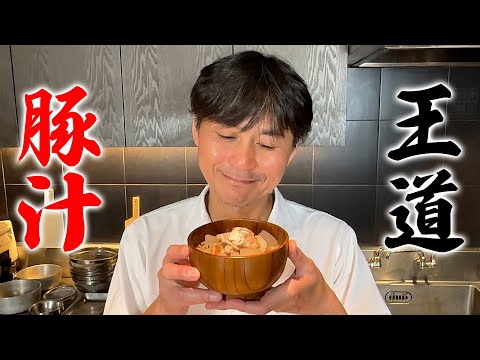
Video by 【賛否両論】笠原将弘の料理のほそ道 on YouTube, in Japanese · Open on YouTube
- Gluten-free with a swap: Use tamari instead of soy sauce and a rice or soybean miso (barley 'mugi' miso contains gluten)
- Dairy-free
- Nut-free
Contains: Gluten, Fish, Sesame, Soy. Check labels on stock, sauces and spice mixes.
Pork belly, burdock, daikon, carrot and konjac in a miso broth: about 12 g protein, 3 g fibre and 14.5 g net carbs a bowl, with under 3 g added sugar (from the mirin). Miso makes it salty, about 880 mg sodium a bowl.
The printable card is ink-friendly, fits on one page and has a QR code back to this recipe.
Ingredients 13
Method
The cook speaks Japanese; every step is written here in English. Tap a time to watch that step in the video. For subtitles, tap CC in the video, then Settings › Subtitles › Auto-translate › English.
- Peel the daikon and cut it into 5 mm quarter-moons; cut the unpeeled carrot the same thickness. Slice the burdock 5 mm thick on the diagonal and rinse it briefly. Cut the konnyaku 5 mm thick, slice the long onion and cut the pork into 3 cm pieces. 1:48
- Put the daikon, carrot, burdock and konnyaku in a pot of cold water and bring to the boil. As soon as it boils, drain: the roots are only half cooked, and the konnyaku loses its smell. 5:18
- Heat 1 tsp sesame oil in a deep frying pan over medium heat and fry the pork until it changes colour and separates. Add the parboiled vegetables and toss until coated in the pork fat. 8:05
- Pour in 600 ml dashi and bring to the boil. Skim off the scum (leave some of the fat), turn the heat to low and simmer about 10 minutes until a skewer slides into the burdock. Add a splash of water if it reduces. 9:48
- Dissolve 3 tbsp miso in a little of the hot broth, stir it in with 1 tbsp mirin, 1 tsp light soy sauce and ½ tsp grated ginger, and heat just briefly so the miso keeps its aroma. Taste and add a little more miso if needed. 11:36
- Ladle into bowls and top with the sliced long onion and a sprinkle of ichimi chilli. 12:55
Tip. Serves 2–3. In Japan it is eaten with rice and pickles; with plenty of vegetables it also makes a light meal on its own. Lean pork leg slices make it lighter. Add mushrooms or napa cabbage in season. Keeps 2 days in the fridge.
The method is a summary in our words — the video shows every step.
One serve gives you 1 of 3
Where the energy comes from one serve
- Net carbs 19%
- Protein 16%
- Fat 65%
Low carb: under 26% of the energy is from carbs.
Vitamins & minerals % of a day, one serve · tap for more
Vitamin K High21%
26 µg a serve, mostly from naganegi (67%). Needed for blood clotting and bones. Leafy greens and herbs are very rich in it. If you take warfarin, keep your intake steady and talk to your doctor.
Vitamin B12 Source18%
0.4 µg a serve, mostly from pork belly (97%). Keeps nerves and blood cells healthy. Found almost only in animal foods and fortified foods (some plant milks, nutritional yeast), so vegans need a reliable source.
Vitamin A Source16%
148 µg a serve, mostly from carrot (94%). Keeps eyes, skin and the immune system healthy. Orange vegetables and dark greens give beta-carotene, which the body turns into vitamin A.
Omega-3 Source16%
0.3 g a serve, mostly from pork belly (71%). Omega-3 fats support the heart and brain. Oily fish give EPA and DHA; walnuts, flax, chia and canola give ALA, which the body converts only a little.
Zinc Source13%
1.4 mg a serve, mostly from miso (43%). Needed for immunity, wound healing, taste and growth. Meat, seafood, legumes, seeds and whole grains supply it.
Vitamin B6 Source13%
0.2 mg a serve, mostly from gobo (33%). Helps turn food into energy and make brain messengers. Chickpeas, fish, poultry, potatoes and bananas are good sources.
Vitamin C Source12%
11 mg a serve, mostly from daikon radish (68%). An antioxidant needed for collagen, immunity and iron absorption. Long cooking destroys some, so raw herbs, citrus and capsicum help.
Potassium Source11%
520 mg a serve. Balances sodium to help control blood pressure and keeps muscles and nerves working. Beans, potatoes, leafy greens and fruit are rich sources.
Selenium Source11%
5.8 µg a serve, mostly from pork belly (69%). Part of the body's antioxidant enzymes and needed for thyroid hormones. Seafood, eggs, meat and Brazil nuts are rich sources.
Show the other 6
Magnesium9%
40 mg a serve, mostly from gobo (26%). Takes part in hundreds of reactions — energy, muscles, nerves, blood sugar and bones. Nuts, seeds, legumes and whole grains are good sources.
Iron7%
1.2 mg a serve, mostly from miso (37%). Carries oxygen in your blood. Iron from plants absorbs better with vitamin C in the same meal — lemon, tomato or capsicum.
Folate7%
29 µg a serve, mostly from daikon radish (32%). Needed to make DNA and new cells — especially important before and in early pregnancy. Legumes and leafy greens are rich sources.
Calcium4%
56 mg a serve. Builds bones and teeth and helps muscles and nerves work. Dairy, calcium-set tofu, sardines with their bones and some greens supply it.
Vitamin E4%
0.5 mg a serve, mostly from pork belly (37%). An antioxidant that protects cell membranes. Nuts, seeds and plant oils such as olive oil are the main sources.
Vitamin D0%
0 µg a serve. Helps you absorb calcium for bones and supports muscles. Few foods have much — oily fish, eggs, UV-exposed mushrooms, fortified milks. Sunlight is the main source.
Estimated from the ingredient list with USDA FoodData Central values; % of a day uses the food-label daily values. How this works
You might also like
 Chawanmushi (Japanese Savoury Steamed Egg Custard)Japanese · 97 kcal · 11 g protein
 Classic Miso Soup with Tofu and WakameJapanese · 72 kcal · 5.7 g protein
 Hakusai-zuke (Japanese Salt-Pickled Napa Cabbage)Japanese · 9 kcal · 0.6 g protein
 Kenchinjiru (Japanese Tofu and Root Vegetable Soup)Japanese · 225 kcal · 12 g protein
 Komatsuna Nibitashi (Simmered Greens and Fried Tofu)Japanese · 66 kcal · 4 g protein
 Nasu Dengaku (Grilled Miso-Glazed Eggplant)Japanese · 84 kcal · 2.5 g protein
Recipe and video by 【賛否両論】笠原将弘の料理のほそ道; the method summary, nutrition estimate and diet notes are Notbroken’s. General information about food, not dietary advice.