Japanese · lunch, snack
Salmon Onigiri (Japanese Rice Balls)

Video by Sudachi on YouTube · Open on YouTube
- Pescatarian
- Gluten-free with a swap: Use tamari instead of soy sauce
- Nut-free
Contains: Gluten, Fish, Milk, Sesame, Soy. Check labels on stock, sauces and spice mixes.
A light, portable lunch at about 235 kcal for two rice balls: the salmon, cooked in just a teaspoon of butter, gives 40% of a day's omega-3 and plenty of vitamin B12 per serve.
The printable card is ink-friendly, fits on one page and has a QR code back to this recipe.
Ingredients 7
Method
Tap a time to watch that step in the video.
- Melt the butter in a frying pan over medium heat and cook the salmon a couple of minutes on each side until cooked through. 0:07
- Break the salmon into flakes with a spatula, as fine or chunky as you like. Add the soy sauce and keep cooking until it has been absorbed and the pan is dry. 0:34
- Tip the salmon into a bowl with the warm rice, sesame seeds and green onion. Fold together with a cutting motion so you don't crush the grains. 1:13
- Wet your hands with cold water, take a portion of rice and gently press and turn it into a triangle (or pack it into an onigiri mould). Divide the rice first if you want even balls. 2:16
- Wrap each rice ball with a strip of nori and serve, or wrap in cling film for a lunch box. 2:45
Tip. Makes 6 rice balls; a serve is 2 (our estimate). Short-grain rice is needed so they hold together. Brown short-grain rice works for extra fibre. Eat within a day.
The method is a summary in our words — the video shows every step.
One serve gives you 1 of 3
Where the energy comes from one serve
- Net carbs 58%
- Protein 18%
- Fat 24%
For comparison, low-carb eating usually gets under 26% of its energy from carbs, and ketogenic eating under 10%. Why this is here
Lower-carb idea. About 98% of the 33 g of net carbs come from the japanese short-grain rice. To cut carbs, try cauliflower rice instead, or half and half.
Vitamins & minerals % of a day, one serve · tap for more
Vitamin B12 High44%
1.1 µg a serve, mostly from salmon fillet (71%). Keeps nerves and blood cells healthy. Found almost only in animal foods and fortified foods (some plant milks, nutritional yeast), so vegans need a reliable source.
Omega-3 High40%
0.6 g a serve, mostly from salmon fillet (96%). Omega-3 fats support the heart and brain. Oily fish give EPA and DHA; walnuts, flax, chia and canola give ALA, which the body converts only a little.
Selenium High38%
21 µg a serve, mostly from salmon fillet (52%). Part of the body's antioxidant enzymes and needed for thyroid hormones. Seafood, eggs, meat and Brazil nuts are rich sources.
Vitamin D Source15%
3 µg a serve, mostly from salmon fillet (99%). Helps you absorb calcium for bones and supports muscles. Few foods have much — oily fish, eggs, UV-exposed mushrooms, fortified milks. Sunlight is the main source.
Vitamin B6 Source15%
0.3 mg a serve, mostly from salmon fillet (64%). Helps turn food into energy and make brain messengers. Chickpeas, fish, poultry, potatoes and bananas are good sources.
Show the other 10
Magnesium8%
35 mg a serve, mostly from japanese short-grain rice (40%). Takes part in hundreds of reactions — energy, muscles, nerves, blood sugar and bones. Nuts, seeds, legumes and whole grains are good sources.
Zinc8%
0.9 mg a serve, mostly from japanese short-grain rice (65%). Needed for immunity, wound healing, taste and growth. Meat, seafood, legumes, seeds and whole grains supply it.
Folate8%
30 µg a serve, mostly from strips sushi nori (49%). Needed to make DNA and new cells — especially important before and in early pregnancy. Legumes and leafy greens are rich sources.
Vitamin E7%
1.1 mg a serve, mostly from salmon fillet (89%). An antioxidant that protects cell membranes. Nuts, seeds and plant oils such as olive oil are the main sources.
Vitamin A6%
54 µg a serve, mostly from strips sushi nori (48%). Keeps eyes, skin and the immune system healthy. Orange vegetables and dark greens give beta-carotene, which the body turns into vitamin A.
Iron5%
0.9 mg a serve, mostly from white sesame seeds (28%). Carries oxygen in your blood. Iron from plants absorbs better with vitamin C in the same meal — lemon, tomato or capsicum.
Vitamin K5%
6.1 µg a serve, mostly from green onion (91%). Needed for blood clotting and bones. Leafy greens and herbs are very rich in it. If you take warfarin, keep your intake steady and talk to your doctor.
Potassium4%
210 mg a serve, mostly from salmon fillet (50%). Balances sodium to help control blood pressure and keeps muscles and nerves working. Beans, potatoes, leafy greens and fruit are rich sources.
Calcium3%
39 mg a serve, mostly from white sesame seeds (42%). Builds bones and teeth and helps muscles and nerves work. Dairy, calcium-set tofu, sardines with their bones and some greens supply it.
Vitamin C2%
1.9 mg a serve, mostly from salmon fillet (54%). An antioxidant needed for collagen, immunity and iron absorption. Long cooking destroys some, so raw herbs, citrus and capsicum help.
Estimated from the ingredient list with USDA FoodData Central values; % of a day uses the food-label daily values. How this works
You might also like
 Ajitsuke Tamago (Japanese Marinated Ramen Eggs)Japanese · 95 kcal · 6.6 g protein
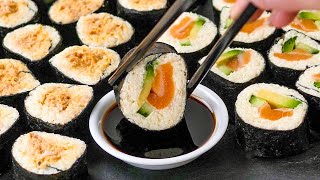 Cauliflower Rice Sushi Rolls with Salmon and AvocadoJapanese · 304 kcal · 15 g protein
 Kenchinjiru (Japanese Tofu and Root Vegetable Soup)Japanese · 225 kcal · 12 g protein
 Natto Gohan with Kimchi and Green OnionJapanese · 298 kcal · 14 g protein
 Saba Shioyaki (Salt-Grilled Mackerel)Japanese · 322 kcal · 29 g protein
 Teriyaki Salmon Rice Bowls with Bok ChoyJapanese · 719 kcal · 40 g protein
Recipe and video by Sudachi; the method summary, nutrition estimate and diet notes are Notbroken’s. General information about food, not dietary advice.