Thai · lunch, dinner
Gaeng Som (Thai Sour Curry Soup with Prawns and Papaya)

Video by Pailin's Kitchen on YouTube · Open on YouTube
- Gluten-free ingredients
- Dairy-free
- Nut-free
Contains: Crustacea, Fish. Check labels on stock, sauces and spice mixes.
A light broth cooked without oil and full of vegetables, with prawns and fish giving about 16 g of protein a serve. High in vitamin C from the papaya and cabbage and in vitamin A from the carrot and chillies.
The printable card is ink-friendly, fits on one page and has a QR code back to this recipe.
Ingredients 18
Method
Tap a time to watch that step in the video.
- For the paste, blend the seeded dried chillies, shallots, garlic, fingerroot, salt and shrimp paste with just enough water to make it smooth. 0:50
- Bring the stock to a simmer and poach the fish until just cooked. Lift it out, mash it finely with a fork or mortar and pestle, and return it to the pot with the curry paste. Bring to a boil. 3:07
- Season with the fish sauce, palm sugar and tamarind, stirring until the sugar dissolves. 4:36
- Add the papaya and carrot and simmer for about 8 minutes, until nearly tender, then add the napa cabbage and long beans for 2 minutes more. 6:26
- Add the shrimp and cook for about 30 seconds, until just pink. Take off the heat, then taste and balance with lime juice and a touch more fish sauce. Serve with jasmine rice. 7:08
Tip. Use fish stock to make it pescatarian. For a vegetarian version use vegetable stock, miso instead of shrimp paste, soy sauce for fish sauce and tofu for the seafood. Other vegetables work too.
The method is a summary in our words — the video shows every step.
One serve gives you 1 of 4
Where the energy comes from one serve
- Net carbs 60%
- Protein 34%
- Fat 6%
For comparison, low-carb eating usually gets under 26% of its energy from carbs, and ketogenic eating under 10%. Why this is here
One serve has about 77% of a day’s sodium. Use less salt, stock or sauce, or a reduced-salt version, to bring it down.
Vitamins & minerals % of a day, one serve · tap for more
Vitamin C High74%
66 mg a serve, mostly from green papaya (64%). An antioxidant needed for collagen, immunity and iron absorption. Long cooking destroys some, so raw herbs, citrus and capsicum help.
Selenium High45%
25 µg a serve, mostly from shrimp (69%). Part of the body's antioxidant enzymes and needed for thyroid hormones. Seafood, eggs, meat and Brazil nuts are rich sources.
Vitamin K High35%
43 µg a serve, mostly from napa cabbage (57%). Needed for blood clotting and bones. Leafy greens and herbs are very rich in it. If you take warfarin, keep your intake steady and talk to your doctor.
Vitamin B12 High33%
0.8 µg a serve, mostly from shrimp (74%). Keeps nerves and blood cells healthy. Found almost only in animal foods and fortified foods (some plant milks, nutritional yeast), so vegans need a reliable source.
Vitamin A High31%
280 µg a serve, mostly from carrot (52%). Keeps eyes, skin and the immune system healthy. Orange vegetables and dark greens give beta-carotene, which the body turns into vitamin A.
Vitamin B6 High27%
0.5 mg a serve, mostly from napa cabbage (28%). Helps turn food into energy and make brain messengers. Chickpeas, fish, poultry, potatoes and bananas are good sources.
Folate High26%
103 µg a serve, mostly from napa cabbage (43%). Needed to make DNA and new cells — especially important before and in early pregnancy. Legumes and leafy greens are rich sources.
Magnesium High22%
91 mg a serve. Takes part in hundreds of reactions — energy, muscles, nerves, blood sugar and bones. Nuts, seeds, legumes and whole grains are good sources.
Potassium Source16%
770 mg a serve. Balances sodium to help control blood pressure and keeps muscles and nerves working. Beans, potatoes, leafy greens and fruit are rich sources.
Omega-3 Source13%
0.2 g a serve, mostly from shrimp (52%). Omega-3 fats support the heart and brain. Oily fish give EPA and DHA; walnuts, flax, chia and canola give ALA, which the body converts only a little.
Iron Source12%
2.2 mg a serve. Carries oxygen in your blood. Iron from plants absorbs better with vitamin C in the same meal — lemon, tomato or capsicum.
Vitamin E Source12%
1.8 mg a serve, mostly from dried chillies (39%). An antioxidant that protects cell membranes. Nuts, seeds and plant oils such as olive oil are the main sources.
Calcium Source10%
136 mg a serve, mostly from napa cabbage (32%). Builds bones and teeth and helps muscles and nerves work. Dairy, calcium-set tofu, sardines with their bones and some greens supply it.
Zinc Source10%
1.1 mg a serve, mostly from shrimp (49%). Needed for immunity, wound healing, taste and growth. Meat, seafood, legumes, seeds and whole grains supply it.
Show the other 1
Vitamin D1%
0.2 µg a serve, mostly from white fish (81%). Helps you absorb calcium for bones and supports muscles. Few foods have much — oily fish, eggs, UV-exposed mushrooms, fortified milks. Sunlight is the main source.
Estimated from the ingredient list with USDA FoodData Central values; % of a day uses the food-label daily values. How this works
You might also like
 Gaeng Om Gai (Isan Chicken and Dill Herb Curry, No Oil)Thai · 261 kcal · 42 g protein
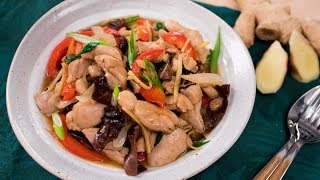 Gai Pad King (Thai Ginger Chicken Stir-Fry)Thai · 301 kcal · 26 g protein
 Kaeng Liang (Thai Peppery Vegetable Soup with Prawns)Thai · 109 kcal · 16 g protein
 Kai Jeow Moo Sap (Thai Pork Omelette)Thai · 430 kcal · 26 g protein
 Larb (Thai Minced Chicken or Pork Salad)Thai · 343 kcal · 24 g protein
 Pad Kra Pow Gai (Thai Basil Chicken Mince)Thai · 556 kcal · 31 g protein
Recipe and video by Pailin's Kitchen; the method summary, nutrition estimate and diet notes are Notbroken’s. General information about food, not dietary advice.