Move · Videos · Technique · 8 min
Hanging Leg Raise: Seven Progressions From Floor to Full Raise
Video by Zack Henderson on YouTube · Open on YouTube
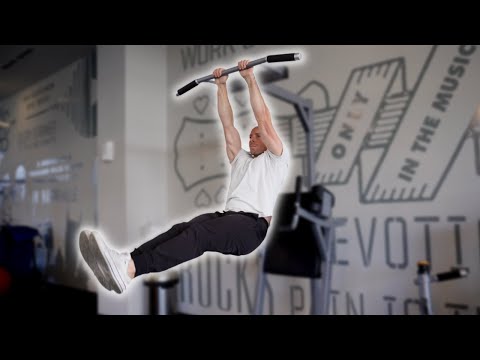
A strength coach builds up to the strict hanging leg raise, an advanced move, in seven steps: floor leg raises holding a low bar, L-sits on a chair, hanging knee raises, weighted knee raises, frog raises, L-raises and slow negatives, with grip-free options on a captain's chair or dip bars.
- 8 min
- Advanced
- Low impact (no jumping)
- pull-up bar, chair
Step by step 6
Tap a time to watch that step in the video.
- Technique: hang in a tight hollow-body shape, breathe out as you fold up pushing the hands forward, lower slowly. 1:09
- Floor leg raises holding a low bar, lowering slowly, then L-sit holds pushing down on the edge of a chair. 2:39
- Hanging knee raises: tuck the knees up as far as you can control, lats engaged; then add weight at the feet. 3:52
- Frog raises, knees up then legs straight on the way down, then hanging L-raises to parallel with a pause. 4:40
- Slow negatives: tuck up and reach the feet to the bar, pause, then lower the straight legs slowly. 5:33
- No grip needed: use a captain's chair or dip bars; train 3 to 8 good reps for 3 to 5 sets. 6:07
The steps are a summary in our words, checked against the video — the coach shows every move.
Form cues from the coach
- Hang in a tight hollow-body shape with glutes and lats engaged so you don't swing
- Breathe out as you fold up, pushing your hands forward and letting your pelvis curl up
- Lower slowly under control and keep sets to three to eight good reps
What it works
Tap an area for more videos that work it.
Joints it uses 3 takes load
- Shoulders takes loadhanging from the bar, L-sit on a chair
- Wrists & hands takes loadgrip in hangs, pushing down in the L-sit
- Hips takes loadlifting the legs: knee, frog and L-raises
- Elbows movesstraight-arm hang and L-sit
- Lower back movespelvis curls up as the low back rounds
- Weight on your hands. The wrists bend back under load. Fists, push-up handles or your forearms ease it.
- Down on the floor. You get down to the floor and back up again.
- Rounding or twisting the back. With osteoporosis or a back problem, move smoothly and within comfort, and ask a physio which suit you.
Easier option from the coach: Floor leg raises, chair L-sit and knee raises; captain's chair or straps spare the grip
A guide to the joints this video’s moves load, from what the coach does — not medical advice. Some ache is normal; stop if a joint hurts sharply. How joints are rated
More like this
 Deep Core Strengthening for Beginners: Level 1 (NHS Physios)ouhnhs · 7 min · beginner
 How to Plank: Form Cues and ProgressionsE3 Rehab · 4 min · beginner
 Dead Bug: Brace With a Neutral SpineSquat University · 9 min · beginner
 Bird Dog for a Stronger Low BackPhysical Therapy & Hand Clinic of Hillsboro · 5 min · beginner
 Pallof Press With a Band: Five WaysIvana Chapman · 7 min · beginner
 How to Engage Your Deep Core in 3 StepsMichelle Kenway · 6 min · beginner
Video by Zack Henderson; the summary, steps, cues, body areas and joint notes are Notbroken’s, written from what the coach actually does in the video and checked a second time. Warm up first, take the easier options until a move feels easy, and stop if you feel sharp pain, chest pain or dizziness. General instruction, not advice for your body. About & safety