Move · Videos · Technique · 7 min
Deep Core Strengthening for Beginners: Level 1 (NHS Physios)
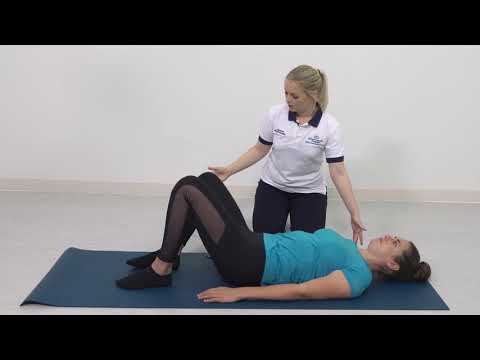
Video by ouhnhs on YouTube · Open on YouTube
The women's and men's health physiotherapy team at an NHS hospital shows how to switch on the deep tummy muscles, then five beginner moves: knee fall-outs, heel slides, a rolling shoulder bridge, clams and arm lifts on all fours. Useful when rebuilding core strength, including after pregnancy.
- 7 min
- Beginner
- Low impact (no jumping)
- mat
Step by step 6
Tap a time to watch that step in the video.
- Deep tummy: breathe in through the nose, then draw the lower tummy down towards your spine as you breathe out. 0:46
- Hip twist: on your back, knees bent, let one knee fall out only as far as you can without the other hip lifting. 1:20
- One leg stretch: slide one heel out along the floor without the pelvis moving, then slide it back; alternate. 2:16
- Shoulder bridge: tilt the pelvis and curl up to a long line from knees to shoulders, then roll down bit by bit. 3:27
- Clam: on your side, knees bent, float the top knee up as far as you can without the pelvis rolling back. 4:22
- Arm lifts on all fours: hold a flat back, tummy drawn in, and float one arm to about shoulder height, no twisting. 5:16
The steps are a summary in our words, checked against the video — the coach shows every move.
Form cues from the coach
- Breathe in through your nose, then draw your tummy muscles down towards your spine as you breathe out
- Let the knee fall out only as far as you can without the opposite hip lifting
- Keep breathing throughout and stop if anything feels uncomfortable
What it works
Tap an area for more videos that work it.
Joints it uses light on the joints
- Shoulders movesarm lifts on all fours
- Wrists & hands movesarm lifts on hands and knees
- Lower back movesrolling up and down in the shoulder bridge
- Hips movesknee fall-outs, heel slides, bridge, clams
- Knees moveshands-and-knees position
- Kneeling. Pressure on the kneecaps — a folded towel or cushion under the knees helps.
- Weight on your hands. The wrists bend back under load. Fists, push-up handles or your forearms ease it.
- Down on the floor. You get down to the floor and back up again.
A guide to the joints this video’s moves load, from what the coach does — not medical advice. Some ache is normal; stop if a joint hurts sharply. How joints are rated
More like this
 Bird Dog for a Stronger Low BackPhysical Therapy & Hand Clinic of Hillsboro · 5 min · beginner
 McGill Big 3 Core Exercises: Bird Dog, Side Plank, Curl-UpEdmonton West Primary Care Network · 6 min · beginner
 Hollow Body Hold: Form and ProgressionsZack Henderson · 5 min · all levels
 10 Standing Core Exercises, From Easy to Hard (No Floor Work)Dr. Dave Candy - Physical Therapist · 17 min · all levels
 Hanging Leg Raise: Seven Progressions From Floor to Full RaiseZack Henderson · 8 min · advanced
 How to Plank: Form Cues and ProgressionsE3 Rehab · 4 min · beginner
Video by ouhnhs; the summary, steps, cues, body areas and joint notes are Notbroken’s, written from what the coach actually does in the video and checked a second time. Warm up first, take the easier options until a move feels easy, and stop if you feel sharp pain, chest pain or dizziness. General instruction, not advice for your body. About & safety