Move · Videos · Mobility · 4 min
Wall Ball Self-Myofascial Release for Upper Back and Shoulder
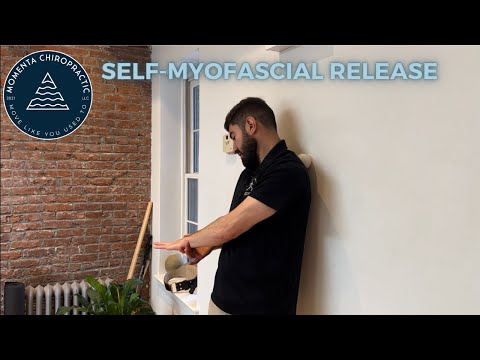
Video by Momenta Chiropractic on YouTube · Open on YouTube
A chiropractor shows how to pin a lacrosse ball against a wall on the upper trap, the corner of the shoulder blade and the rhomboids, adding arm and head movement. A quick, simple technique lesson.
- 4 min
- Beginner
- Low impact (no jumping)
- wall
Good forHealthy fascia
Step by step 5
Tap a time to watch that step in the video.
- The muscles: upper trap on top of the shoulder, levator at the blade's top corner, rhomboids behind the blade. 0:21
- Upper trap: pin the ball on the wall on top of the shoulder, lean in, take the arm down and across, head following. 0:51
- Levator: ball on the inner top corner of the shoulder blade, off the bone; arm down and across, eyes following. 1:52
- Rhomboids: ball behind the middle of the shoulder blade; take the arm straight across at mid height, then the head. 2:36
- Do 5 to 10 repetitions per area at a tolerable pressure, and stop if it doesn't feel tolerable. 3:14
The steps are a summary in our words, checked against the video — the coach shows every move.
Form cues from the coach
- Lean into the wall with light pressure and hold the ball in place
- Take the arm down and across while the head follows
- Use a tolerable pressure and stop if it hurts
What it works
Tap an area for more videos that work it.
Joints it uses light on the joints
- Neck moveshead follows the arm down and across
- Shoulders movesarm moves down and across against the ball
- Upper back movesball pinned on trap, levator and rhomboids
Easier option from the coach: Lean in with light pressure; stop if it is not tolerable
A guide to the joints this video’s moves load, from what the coach does — not medical advice. Some ache is normal; stop if a joint hurts sharply. How joints are rated
More like this
 10-Minute Full-Body Foam Roller RoutineMobility Doc · 10 min · beginner
 Upper-Body Foam Rolling: Back, Lats, Shoulders and Armsmobility by julia reppel · 12 min · all levels
 Ball Release for Upper Back and ShouldersKendra Fitzgerald · 11 min · all levels
 Standing Posture Routine With Wall WorkDr. Jon Saunders · 12 min · beginner
 Pilates Posture Flow for Neck, Upper Back and ShouldersAnnie Pilates Physical Therapist · 14 min · all levels
 Posture Alignment Exercises for Ages 50+Will Harlow – Over-Fifties Specialist Physio · 17 min · beginner
Video by Momenta Chiropractic; the summary, steps, cues, body areas and joint notes are Notbroken’s, written from what the coach actually does in the video and checked a second time. Warm up first, take the easier options until a move feels easy, and stop if you feel sharp pain, chest pain or dizziness. General instruction, not advice for your body. About & safety