Move · Videos · Technique · 7 min
Dumbbell Bench Press: Five Form Fixes
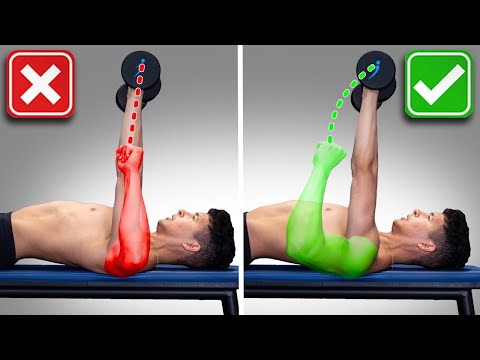
Video by Jeremy Ethier on YouTube · Open on YouTube
Covers five common dumbbell bench press mistakes and how to fix them so the chest, not the shoulders, does the work, plus how to use slight incline and decline angles. Suits gym-goers who already press.
- 7 min
- Intermediate
- Low impact (no jumping)
- dumbbells, bench
Step by step 5
Tap a time to watch that step in the video.
- Arm path: tuck your elbows to about 45–60 degrees, grip turned in slightly, lowering toward mid-chest. 0:21
- Forearms: keep them vertical over your elbows on every rep; go lighter if they start to bend inwards. 1:31
- Shoulders: pinch your shoulder blades as you lower and keep your chest up so the shoulders don't round. 2:46
- Top of the rep: stop with your arms straight over your shoulders rather than touching the dumbbells. 3:58
- Bench angle: add a slight 15–30 degree incline for the upper chest, or a slight decline for the lower chest. 4:56
The steps are a summary in our words, checked against the video — the coach shows every move.
Form cues from the coach
- Tuck the elbows to about 45–60 degrees instead of flaring them wide
- Keep the forearms vertical over the elbows on every rep
- Pinch the shoulder blades and keep the chest up; stop with arms over the shoulders
What it works
Tap an area for more videos that work it.
Joints it uses 1 take load
- Shoulders takes loaddumbbell bench press
- Elbows movespressing and lowering the dumbbells
- Wrists & hands movesgripping and stacking over the elbows
A guide to the joints this video’s moves load, from what the coach does — not medical advice. Some ache is normal; stop if a joint hurts sharply. How joints are rated
More like this
 Push-Up Progression Plan: Build Up to 50 Push-Ups in a RowFitnessFAQs · 6 min · intermediate
 How to Do a Perfect Push-UpCalisthenicmovement · 4 min · beginner
 Build Up to Your First Push-UpHybrid Calisthenics · 11 min · beginner
 Dumbbell Floor Press Setup and Variations[P]rehab · 5 min · beginner
 Push-Up Progression: Wall, Incline, Knees, FloorCara Kuykens · 10 min · beginner
 Push-Up Progressions for Over-50sAt-Home Exercise 55+ | Be Mobile Physiotherapy · 7 min · beginner
Video by Jeremy Ethier; the summary, steps, cues, body areas and joint notes are Notbroken’s, written from what the coach actually does in the video and checked a second time. Warm up first, take the easier options until a move feels easy, and stop if you feel sharp pain, chest pain or dizziness. General instruction, not advice for your body. About & safety