Move · Videos · Technique · 7 min
Face Pulls With a Band: Setup and Angles
Video by Citizen Athletics on YouTube · Open on YouTube
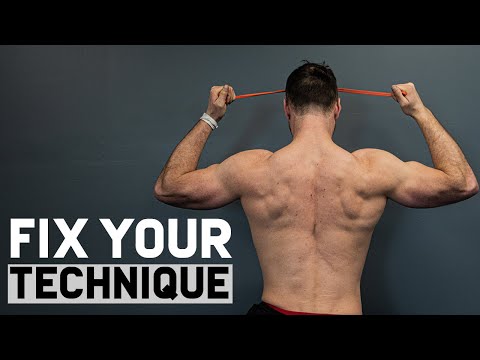
A physical therapist shows how to set up face pulls with resistance bands, including a two-band trick that works like a rope handle, and how anchor height shifts the focus between rear delts, traps and rotator cuff.
- 7 min
- Beginner
- Low impact (no jumping)
- resistance band
Step by step 6
Tap a time to watch that step in the video.
- Anchor the band securely, wrapped around something solid, so it can't snap back at your face. 0:47
- Two-band trick: loop a second band through so it acts like a rope handle and you don't hit your face. 1:30
- The pull: draw the hands back and rotate them outward as the arms come apart against the bands. 2:11
- Anchor at face height, like a classic face pull, to bias the rear delts and mid-back muscles. 3:03
- Anchor around chest height to work the whole upper back plus the rotator cuff; lower still is mostly rotation. 3:45
- A high anchor, pulling down and back, puts more work on the lower traps. 5:06
The steps are a summary in our words, checked against the video — the coach shows every move.
Form cues from the coach
- Anchor the band securely so it can't snap back at you
- Pull back and rotate the hands outward as the arms come apart
- Set the anchor around chest height to work the whole upper back and rotator cuff
What it works
Tap an area for more videos that work it.
Joints it uses 1 take load
- Shoulders takes loadband face pulls, pulling back and rotating out
- Elbows movespulling the band back
- Wrists & hands movesgripping the band handles
A guide to the joints this video’s moves load, from what the coach does — not medical advice. Some ache is normal; stop if a joint hurts sharply. How joints are rated
More like this
 How to Do the Standing Barbell Overhead PressBarbell Logic · 5 min · beginner
 Dumbbell Rear Delt Fly: Fix Three MistakesColossus Fitness · 4 min · beginner
 Serratus Wall Slide for Shoulder Blade ControlSquat University · 7 min · beginner
 Locking Dance Basics: How to Do the LockJoeyTheJAM · 15 min · beginner
 Scapular Push-Up ProgressionsPrecision Movement · 6 min · all levels
 Bear, Monkey, Frogger and Crab: Animal MovesGMB Fitness (Praxis) · 10 min · all levels
Video by Citizen Athletics; the summary, steps, cues, body areas and joint notes are Notbroken’s, written from what the coach actually does in the video and checked a second time. Warm up first, take the easier options until a move feels easy, and stop if you feel sharp pain, chest pain or dizziness. General instruction, not advice for your body. About & safety