Move · Videos · Cardio · 34 min
Cardiac Rehab Standing Circuit, Level 2 (Swansea Bay NHS)

Video by Swansea Bay NHS TV on YouTube · Open on YouTube
Copied from a Swansea Bay NHS cardiac rehab class: warm-up and leg stretches, ten one-minute stations (curls, step-ups, band pull-downs, lunges, squats, sit-to-stands) with marching between, then a cool-down. Made for cardiac rehab patients; follow your own rehab team's advice.
- 34 min
- Beginner
- Low impact (no jumping)
- chair, step, dumbbells, resistance band
Good forHealthy ageingHeart health
Step by step 14
Tap a time to watch that step in the video.
- Warm-up: march on the spot at your own pace, then forward taps, small squats and gentle arm movements. 3:30
- Upper-body stretches: head turns, shoulder circles, arm-across and behind-the-shoulder stretches, trunk twists. 6:02
- Leg stretches: hamstring, inner-thigh, calf and front-of-thigh stretches each side, holding a chair if needed. 10:10
- Circuit, one minute each: bicep curls with weights or tins of beans, keeping your feet moving. 15:00
- Step-ups on the bottom stair, or step back or march with high knees if you have no step. 16:16
- Band pull-downs: one hand at your chest, the other below it, pull down slowly, then change arms. 17:26
- Lunges: step forward and back, holding a sturdy object for balance if you need it. 18:36
- Lateral raises with weights or tins; after chest-opening surgery, lift your hands only to your chin until 12 weeks. 19:46
- Squats: feet shoulder-width apart and a small movement down, holding on for balance if needed. 20:53
- Chest press: band around your back at the shoulder blades, press both arms forward and back. 22:06
- Sit-to-stands from a chair; if you feel dizzy or have hip, knee or back problems, do seated leg raises instead. 23:17
- Upright rows with the band under your feet or with weights, adding a slight knee bend. 24:26
- Last station: march on the spot for a minute at a pace that suits your breathing. 25:38
- Cool-down: slower marching and the warm-up leg, arm and trunk stretches again, then a deep breath to finish. 26:46
The steps are a summary in our words, checked against the video — the coach shows every move.
Form cues from the coach
- Work at a steady pace you can keep up and breathe through
- Hold a chair or sturdy object for balance whenever you need it
- Leave out any move that causes discomfort and keep marching instead
- After open-chest heart surgery, avoid pushing, pulling and heavy lifting while the bone heals
What it works Whole body
Tap an area for more videos that work it.
Joints it uses 4 takes load
- Shoulders takes loadlateral raises, upright rows, band pull-downs and press
- Elbows takes loadcurls with weights or tins, band work
- Hips takes loadlunges, squats, sit-to-stands, step-ups
- Knees takes loadstep-ups, lunges, squats, sit-to-stands
- Wrists & hands movesholding weights, tins or band
- Ankles & feet movesmarching, tapping, step-ups
Easier option from the coach: Hold a chair for balance; leave out any move and keep marching; seated or low-knee options
A guide to the joints this video’s moves load, from what the coach does — not medical advice. This video was harder to rate from its talk and pictures, so treat it as a rougher guide. Some ache is normal; stop if a joint hurts sharply. How joints are rated
More like this
 Cardiac Rehab Home Program: Intervals with Seated OptionsNewYork-Presbyterian Hospital · 28 min · beginner
 Home Cardiac Rehab Circuit (East Cheshire NHS Trust)East Cheshire NHS Trust · 23 min · beginner
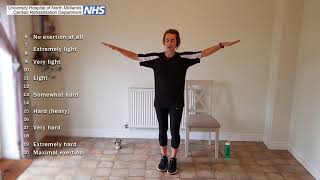 Standing Cardiac Rehab Session 1 (NHS Hospital Team)UHNM Cardiac Rehab Team · 38 min · beginner
 30-Minute Walk at Home for Older AdultsSilverSneakers · 30 min · beginner
 30-Minute Easy Low-Impact AerobicsJenny McClendon · 30 min · beginner
 15-Minute Interval Cardio for Over-55s, No JumpingAt-Home Exercise 55+ | Be Mobile Physiotherapy · 17 min · all levels
Video by Swansea Bay NHS TV; the summary, steps, cues, body areas and joint notes are Notbroken’s, written from what the coach actually does in the video and checked a second time. Warm up first, take the easier options until a move feels easy, and stop if you feel sharp pain, chest pain or dizziness. General instruction, not advice for your body. About & safety