Move · Videos · Technique · 3 min
How to Do a Side Plank and Avoid Mistakes

Video by Get Exercise Confident on YouTube · Open on YouTube
A trainer sets up the side plank step by step and points out the four most common mistakes, so you work the sides of your core without straining shoulder or back.
- 3 min
- Beginner
- Low impact (no jumping)
- mat
Step by step 6
Tap a time to watch that step in the video.
- Set-up: lie on your side, feet stacked, elbow directly under your shoulder with the upper arm vertical. 0:28
- Brace your abs and squeeze your glutes to lift into a straight line from ankle to shoulder, chest tall. 0:49
- Mistake 1: losing your posture, with the head and shoulders curling forward. 1:40
- Mistake 2: sinking into the shoulder, which strains the shoulder and neck. 2:00
- Mistake 3: hips sagging towards the floor or pushing too high. 2:14
- Mistake 4: twisting or the hips drifting forward or back; keep shoulder and hip pointing at the ceiling. 2:36
The steps are a summary in our words, checked against the video — the coach shows every move.
Form cues from the coach
- Place your elbow directly under your shoulder, feet stacked
- Brace your abs and squeeze your glutes to lift into a straight line from ankle to shoulder
- Don't sink into the shoulder or let the hips sag, rise or twist
What it works
Tap an area for more videos that work it.
Joints it uses 1 take load
- Shoulders takes loadholding side planks on the forearm
- Elbows movesforearm on the floor, elbow under shoulder
- Down on the floor. You get down to the floor and back up again.
A guide to the joints this video’s moves load, from what the coach does — not medical advice. Some ache is normal; stop if a joint hurts sharply. How joints are rated
More like this
 Farmer's Carry and Suitcase Carry TechniqueEmergen Performance · 8 min · beginner
 How to Plank: Form Cues and ProgressionsE3 Rehab · 4 min · beginner
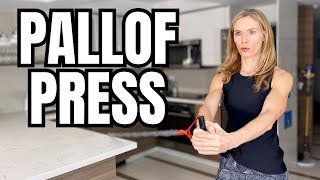 Pallof Press With a Band: Five WaysIvana Chapman · 7 min · beginner
 McGill Big 3 Core Exercises: Bird Dog, Side Plank, Curl-UpEdmonton West Primary Care Network · 6 min · beginner
 Four Low-Back Stability Exercises: Bridges, Dead Bug, Side PlankRehab Science · 10 min · beginner
 Kettlebell Turkish Get-Up: The Basic StepsStrongFirst · 3 min · beginner
Video by Get Exercise Confident; the summary, steps, cues, body areas and joint notes are Notbroken’s, written from what the coach actually does in the video and checked a second time. Warm up first, take the easier options until a move feels easy, and stop if you feel sharp pain, chest pain or dizziness. General instruction, not advice for your body. About & safety