Move · Videos · Pilates · 48 min
48-Minute Full-Body Pilates Ring (Magic Circle) Workout
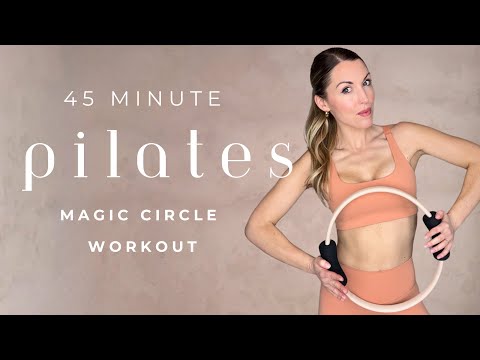
Video by Keel Pilates on YouTube · Open on YouTube
A certified mat Pilates instructor uses a Pilates ring for standing squats and calf raises, chest and biceps squeezes, upper-back lifts, knee push-ups, ab curls, roll-ups, twists, bridges and side-lying leg work, then a long stretch. Easier and harder options are shown.
- 48 min
- All levels
- Low impact (no jumping)
- mat
Step by step 14
Tap a time to watch that step in the video.
- Warm-up: lift the ring overhead with the navel drawn in, side stretches, flat-back roll-downs and knee lifts. 0:24
- Wide-stance ring swings over each bent knee with the other heel lifting, then twists in a wide squat. 4:56
- Ring between the ankles: calf raises, then squats with the chest lifted and tailbone down, then pulses. 7:14
- Chest squeezes: press the ring between the heels of the hands as you lower into a wide squat. 10:37
- Lying face down: lift the ring with straight arms for the upper back, then again with the ring behind you. 12:32
- Knee push-ups with the ring under the breastbone (or without it), then add double pulses. 15:42
- Biceps presses: ring on the shoulder, push it down and resist on the way up; then the other arm. 17:47
- Ab curls with the ring between the knees, squeezing as you curl, then triple pulses with arms by your sides. 21:21
- Roll-ups holding the ring (go halfway if needed), then double-leg stretch, with a harder threading option. 24:42
- Seated obliques: lift one leg and twist toward it, each side, then sweep the ring side to side in a C-curve. 28:12
- Bridges with the ring around the thighs: tailbone tucked, lower and lift, then heel lifts and pulses. 31:35
- Left side: ring held between heel and seat as the top knee lifts, then press the ring down and circle the leg. 34:10
- Right side: the same ring-held lifts, then ring presses and small leg circles, keeping the hips stacked. 38:20
- Cool-down: hamstring stretch with the ring on each foot, kneeling chest opener, puppy pose and side stretches. 42:16
The steps are a summary in our words, checked against the video — the coach shows every move.
Form cues from the coach
- Draw the navel in and keep the spine stacked as the ring goes overhead
- Keep the chest lifted and send the tailbone down in the squats
- Tuck the tailbone and avoid arching the low back in the bridges
What it works Whole body
Tap an area for more videos that work it.
Joints it uses 7 takes load
- Shoulders takes loadknee push-ups, ring overhead, prone arm lifts
- Elbows takes loadknee push-ups with pulses, ring biceps presses
- Wrists & hands takes loadknee push-ups
- Lower back takes loadprone back lifts, roll-ups, seated twists
- Hips takes loadsquats, ring bridges, side-lying leg lifts
- Knees takes loadsquats, squat pulses, wide squats with ring squeeze
- Ankles & feet takes loadcalf raises with ring, bridge heel lifts
- Neck movescrunches and pulses with the head lifted
- Upper back movesprone arm lifts, C-curve rotations
- Kneeling. Pressure on the kneecaps — a folded towel or cushion under the knees helps.
- Weight on your hands. The wrists bend back under load. Fists, push-up handles or your forearms ease it.
- Down on the floor. You get down to the floor and back up again.
- Rounding or twisting the back. With osteoporosis or a back problem, move smoothly and within comfort, and ask a physio which suit you.
Easier option from the coach: Roll halfway up; head down in leg stretches; legs down in back lifts; ring off in push-ups
A guide to the joints this video’s moves load, from what the coach does — not medical advice. Some ache is normal; stop if a joint hurts sharply. How joints are rated
More like this
 34-Minute No-Equipment Barre Workout for All Levelsbarre3 · 34 min · all levels
 32-Minute Barre and Pilates Fusion Workout with a ChairBODi · 32 min · all levels
 25-Minute Full-Body Resistance Band Workout With Cardio IntervalsBodyFit By Amy · 25 min · all levels
 42-Minute Barre Arms and Abs Class with Light Weights, All LevelsPure Barre · 42 min · all levels
 15-Minute Chair Workout for Over-60sElderfitTV Experts In Over 60s Health & Fitness · 17 min · beginner
 35-Minute Full Body Kettlebell Strength (Low Impact)nourishmovelove · 38 min · intermediate
Video by Keel Pilates; the summary, steps, cues, body areas and joint notes are Notbroken’s, written from what the coach actually does in the video and checked a second time. Warm up first, take the easier options until a move feels easy, and stop if you feel sharp pain, chest pain or dizziness. General instruction, not advice for your body. About & safety