Move · Videos · Strength · 31 min
Cardio-Strength Class for Parkinson's (Parkinson's Foundation)
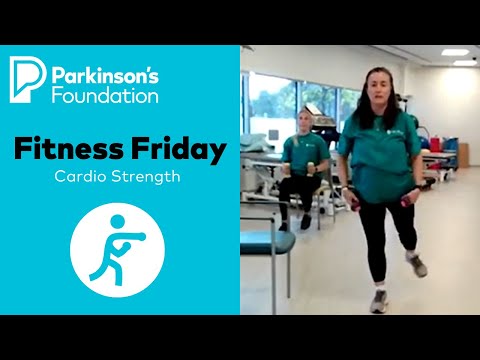
Video by Parkinson's Foundation on YouTube · Open on YouTube
A physical therapist from a Parkinson's Foundation centre of excellence leads short cardio bursts and 12-rep strength moves; two physical therapy students show seated and supported-standing versions. Weights are optional and jumps have step versions.
- 31 min
- All levels
- Moderate impact
- chair
Good forHealthy ageing
Step by step 13
Tap a time to watch that step in the video.
- Warm-up: shoulder rolls, then figure-eight arm swings to the opposite hip, following your hands with your eyes. 0:55
- Stride weight shifts with big arm swings, toes up then onto the toes, each side; then palm flips and finger taps. 2:54
- Cardio: a minute of big marches with arm swings, then a minute of squat punches, knees behind the toes. 5:56
- Side lunge each way, then a slow shoulder raise out to the side, 12 times; weights are optional. 8:08
- Deadlift: knees soft, slide the weights down your thighs with a flat back, then squeeze your buttocks to stand; 12. 9:52
- Modified burpee: hands on the chair, step out, step in, then rise onto your toes or jump; 12 reps. 11:15
- Cardio: a minute of curtsy lunges, then a minute of jumping jacks; pace yourself so you can still talk. 13:05
- Hip extension kicks back, then a slow triceps press, 12 times; stand tall without leaning forward. 15:30
- Rows: knees soft, palms facing, draw the elbows back and squeeze, lowering slowly; 12 reps. 17:41
- Squats: feet forward, hinge back as if to sit, knees behind the toes, then stand; 12 reps. 19:02
- Cardio: a minute of march-march-drive knee lifts, then a minute of elbow-to-knee crunches. 19:59
- Slow overhead press for 12, then I raises: hinge forward, thumbs up, and lift the arms overhead without weights. 22:23
- Cool-down: shoulder, triceps, neck, calf, twist and side stretches, finishing with three deep breaths. 24:37
The steps are a summary in our words, checked against the video — the coach shows every move.
Form cues from the coach
- Pick the seated, supported or unsupported version to suit your balance
- Make the movements nice and big, with full arm swings
- Pace yourself so you can still talk comfortably
What it works Whole body
Tap an area for more videos that work it.
Joints it uses 6 takes load
- Shoulders takes loadoverhead press, I raises, burpee steps, jacks
- Wrists & hands takes loadhands on a chair for burpee steps
- Lower back takes loaddeadlift and bent-over hinges
- Hips takes loadlunges, squats, deadlifts, kickbacks
- Knees takes loadsquats, lunges, jumping jacks, curtsy lunges
- Ankles & feet takes loadjumping jacks, toe or jump burpees
- Neck movesear-to-shoulder stretches in the cool-down
- Elbows movestriceps kickbacks, rows
- Upper back movesrows, trunk rotations, goal-post stretch
- Jumping or hopping. Impact goes through the ankles, knees and hips.
- Weight on your hands. The wrists bend back under load. Fists, push-up handles or your forearms ease it.
- Standing on one leg. Keep a chair or a wall within reach.
Easier option from the coach: Seated and supported-standing versions of every move; no jumps needed
A guide to the joints this video’s moves load, from what the coach does — not medical advice. Some ache is normal; stop if a joint hurts sharply. How joints are rated
More like this
 Pulmonary Rehab Home Exercise Circuit (NHS Trust)Hertfordshire Community NHS Trust · 23 min · all levels
 20-Minute Standing Dumbbell Strength for BeginnersSeniorShape Fitness · 20 min · beginner
 20-Minute All-Standing Full Body Workout (No Jumping)Lucy Wyndham-Read · 24 min · beginner
 Strength Routine With a Lung Condition (Asthma + Lung UK)Asthma + Lung UK · 14 min · all levels
 Bones and Balance Exercise Class for OsteoporosisLegacy Health · 18 min · beginner
 Strength Routine From a Cardiac Rehab Exercise PhysiologistCleveland Clinic · 10 min · all levels
Video by Parkinson's Foundation; the summary, steps, cues, body areas and joint notes are Notbroken’s, written from what the coach actually does in the video and checked a second time. Warm up first, take the easier options until a move feels easy, and stop if you feel sharp pain, chest pain or dizziness. General instruction, not advice for your body. About & safety